
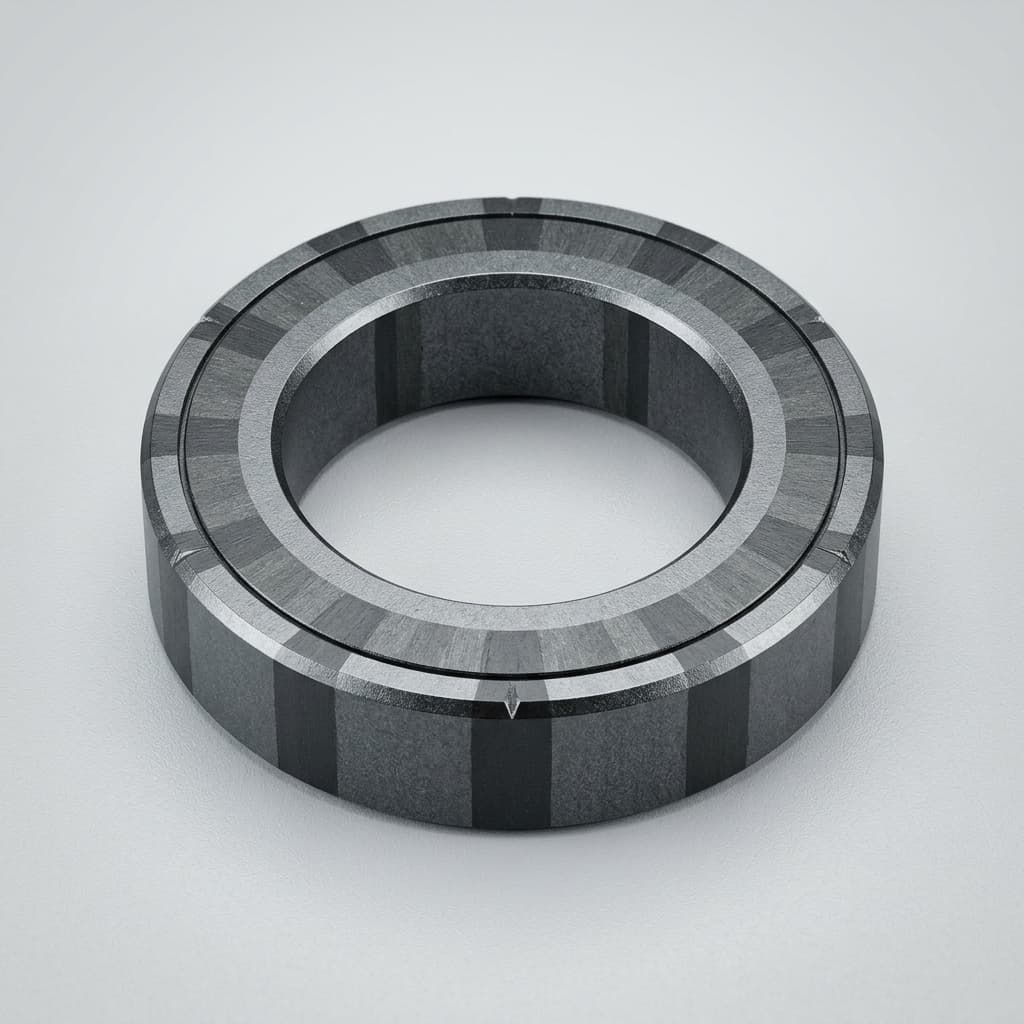
Selecting the Right Binder for Your Molded Magnet: Nylon (PA) vs. PPS
Choosing the wrong polymer binder for an injection molded magnet can lead to catastrophic swelling or melting. Learn when to use PA6, PA12, or PPS for your custom magnetic rotor.
Selecting the Right Binder for Your Molded Magnet: Nylon (PA) vs. PPS
Injection molded magnets are composite materials. They consist of magnetic powders (like Isotropic NdFeB or Strontium Ferrite) suspended in a thermoplastic binder matrix.
While engineers spend immense amounts of time calculating magnetic flux and pole geometry, they often overlook the importance of the polymer binder. Selecting the wrong binder can lead to water absorption, dimension swelling, chemical degradation, or complete structural failure at high temperatures.
At Injection Magnets, we formulate our magnetic compounds using three primary binders: PA6 (Nylon 6), PA12 (Nylon 12), and PPS (Polyphenylene Sulfide). Here is how to choose the right one for your application based on hard data.
Binder Properties Comparison Matrix
Before looking at the full property matrix, the most dramatic difference between these polymers is their response to moisture. The following chart illustrates why PA6 is often disqualified for tight-tolerance fluid applications:
Full Property Comparison Matrix
| Property / Binder | PA6 (Nylon 6) | PA12 (Nylon 12) | PPS (Polyphenylene Sulfide) |
|---|---|---|---|
| Max Operating Temp (Continuous) | 120°C | 100°C | 150°C |
| Peak Temp (Short Term) | 150°C | 120°C | 200°C |
| Water Absorption (24h, 23°C) | High (~1.5%) | Low (< 0.2%) | Negligible (< 0.05%) |
| Chemical Resistance (Automotive) | Fair (Swells in oil/coolant) | Good | Excellent (Inert) |
| Tensile Strength | High | Medium | Very High (but brittle) |
| Relative Cost | $ | $$ | $$$ |
1. PA6 (Nylon 6) - The Cost-Effective Workhorse
Nylon 6 is the most common and cost-effective binder used in bonded magnets globally.
- The Science: PA6 has excellent mechanical strength and flowability during injection. It allows for high magnetic powder loading (up to 65% by volume), which means you can squeeze out maximum magnetic strength for the lowest cost.
- The Catch (Moisture): PA6 is highly hygroscopic. It absorbs moisture from the air. When it absorbs water, the part can swell by up to 0.5% to 1.5% dimensionally. In a tightly toleranced motor air-gap, this swelling can cause the rotor to rub against the stator.
- Best For: Indoor consumer electronics, power tool motors, dry industrial environments, and applications where a slight dimensional change (+/- 0.1mm) over time will not cause mechanical interference.
2. PA12 (Nylon 12) - The Low-Moisture Alternative
If your application requires the toughness of Nylon but cannot tolerate dimensional swelling from humidity, Nylon 12 is the upgrade path.
- The Science: The chemical structure of PA12 has fewer amide groups than PA6, drastically reducing its affinity for water. PA12 absorbs significantly less water, providing excellent dimensional stability even in 90% RH environments. It also offers slightly better resistance to mild chemicals and salts.
- The Catch (Heat & Cost): It is more expensive than PA6 and has a lower maximum continuous operating temperature (typically maxing out around 100°C).
- Best For: Water pump rotors, outdoor sensors, ABS rings, and appliances that operate in highly humid environments where precision tolerances must be maintained over a 10-year lifespan without extreme heat.
3. PPS (Polyphenylene Sulfide) - The Automotive Standard
When dealing with the harsh under-the-hood environments of modern automobiles, EVs, or heavy-duty industrial valves, Nylon is rarely sufficient. This is where PPS dominates the market.
- The Science: PPS is a high-performance semi-crystalline thermoplastic. It is practically impervious to automotive fluids (engine oil, transmission fluid (ATF), Glycol coolant, and brake fluid). It boasts an incredibly high heat deflection temperature, allowing the magnet to operate continuously at 150°C, surviving spikes up to 200°C. It absorbs almost zero moisture, meaning parts hold micron-level tolerances forever.
- The Catch (Brittleness): PPS is a brittle polymer. It has low elongation at break. This requires careful mold design (DFM) to avoid stress cracking, especially during insert molding over steel shafts. It requires hot molds (often >140°C) to inject properly. It is also the most expensive of the three binders.
- Best For: Electronic Expansion Valves (EEV) submerged directly in refrigerants, automotive engine coolant pump rotors, transmission speed sensors, and any application subjected to extreme thermal shock (-40°C to +150°C) and aggressive chemical attack.
Engineering Failure Case: The Swelling Rotor
Scenario: A Tier-1 automotive supplier designed a BLDC water pump using a PA6 bonded NdFeB rotor with a tight 0.3mm air gap to maximize motor efficiency. Failure: During the 1000-hour Glycol coolant immersion test at 90°C, the PA6 binder absorbed moisture and swelled by 1.2% dimensionally. The rotor expanded, rubbed against the stator, and seized the pump entirely. Correction: The rotor material was respecified to a PPS-bonded NdFeB compound. While the raw material cost increased by 15%, the PPS absorbed zero moisture in the hot Glycol, maintaining the 0.3mm air gap perfectly throughout the validation lifecycle.
Summary: Making the Decision
- Need cheap, strong, and operating in a dry place? Go with PA6.
- Need high precision in a wet/humid place at normal temps? Go with PA12.
- Need survival in boiling oil/coolant at 150°C? You must use PPS.
Buyer's RFQ Checklist
When submitting a drawing for an injection molded magnet, explicitly state the environmental requirements so the factory can quote the correct binder:
- Chemical Exposure: (e.g., ATF fluid, 50/50 Glycol, potable water, or none)
- Max Operating Temp: (e.g., 120°C Continuous)
- Air Gap Tolerance: (Helps determine if PA12/PPS is needed to prevent swelling interference)
Selecting the right binder is a balancing act between material cost, tooling design, and environmental survival. At Injection Magnets, we compound our materials specifically for your use case. If you are unsure which polymer matrix fits your application, contact our engineering team today for a material recommendation and DFM review.
Author

Categories
More Posts
EU CRMA Compliance 2026: Sourcing Strategies for Injection Molded NdFeB Magnets
Meet EU CRMA 2026 deadlines for permanent magnets. See sourcing, DPP data, and injection molded NdFeB checks to reduce rare-earth compliance risk.
Injection Molded Hybrid Magnets (NdFeB + Ferrite): Balancing Cost and Performance
See when injection molded hybrid magnets balance NdFeB flux with ferrite cost, with limits, sourcing checks, and RFQ guidance.
Injection Molded Magnet Tolerances: How to Specify Net-Shape Precision Without Cost Overruns
Injection molded magnet tolerances explained: compare standard vs. precision limits, avoid drawing over-specification, and request a DFM review before RFQ.