
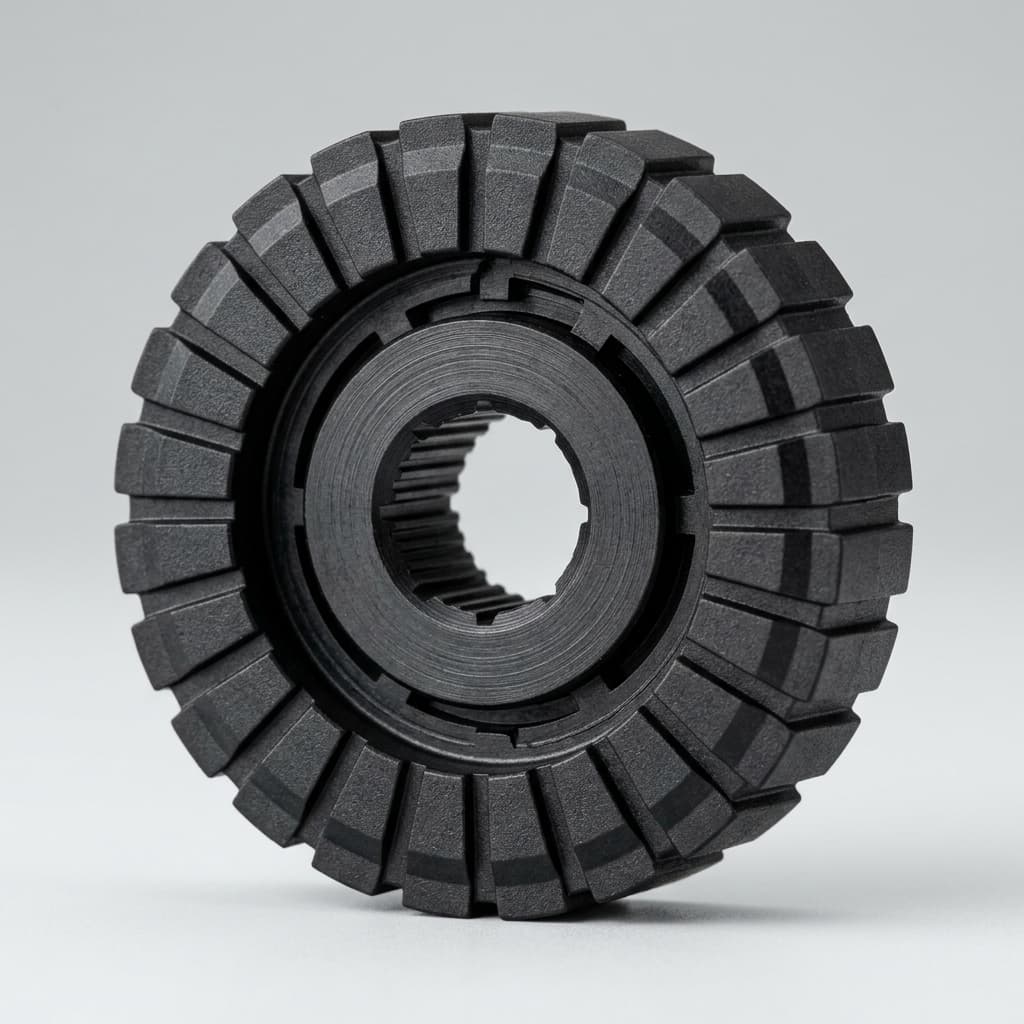
EU CRMA Compliance 2026: Sourcing Strategies for Injection Molded NdFeB Magnets
Meet EU CRMA 2026 deadlines for permanent magnets. See sourcing, DPP data, and injection molded NdFeB checks to reduce rare-earth compliance risk.
EU CRMA Compliance 2026: Sourcing Strategies for Injection Molded NdFeB Magnets
For global OEMs, Tier 1 automotive suppliers, and consumer electronics manufacturers, 2026 marks a decisive turning point in supply chain management. The European Union’s Critical Raw Materials Act (CRMA)—officially Regulation (EU) 2024/1252—has shifted from a theoretical framework into an active compliance mandate. With EU Member States required to implement national penalty regimes by November 24, 2026, the regulatory grace period is rapidly closing.
At the center of this legislative overhaul are permanent magnets, specifically those utilizing Neodymium-Iron-Boron (NdFeB). Because these rare-earth elements are designated as both critical and strategic, any product placed on the EU market containing permanent magnets (such as EV traction motors, HVAC heat pumps, robotics, and sensors) is now subject to unprecedented scrutiny, traceability, and labeling requirements.
For procurement and engineering teams, this presents a massive challenge: How do you secure magnetic performance while de-risking your supply chain and meeting strict EU reporting guidelines? One practical strategy emerging in 2026 is to review where high-grade sintered NdFeB can be replaced by Injection Molded NdFeB or hybrid magnetic compounds without compromising the application's magnetic, thermal, and lifetime requirements.
This comprehensive guide explores the specific CRMA obligations for permanent magnets, why injection molded magnets offer a built-in compliance buffer, and the exact steps your procurement team must take to build a resilient, audit-ready data backbone.
1. The Core CRMA Mandates for Permanent Magnets in 2026
The Critical Raw Materials Act is designed to reduce the EU's dependency on concentrated, non-diversified supply chains for materials critical to the green and digital transitions. For permanent magnets, the legislation introduces a phased rollout of obligations that will fundamentally change how Bills of Materials (BOMs) are managed.
1.1 Supply Chain Risk Assessments
Large companies that manufacture strategic technologies are now required to conduct comprehensive supply chain risk assessments. You must map your entire supply chain back to the raw material extraction and processing phases. This is not a one-time exercise; the CRMA mandates that these risk assessments be updated and presented to regulatory bodies upon request. Failure to adequately map vulnerabilities in your rare-earth supply chain can result in administrative fines starting in late 2026.
1.2 Labelling, Data Carriers, and The Digital Product Passport (DPP)
The most visible aspect of the CRMA is the requirement for transparency at the product level. For in-scope products incorporating permanent magnets, CRMA Article 28 focuses on recyclability information such as magnet type, weight, location, chemical composition, coatings, glues, additives, and removal instructions. That record should be designed to align with the broader Digital Product Passport (DPP) framework under the Ecodesign for Sustainable Products Regulation (ESPR), where product-level data can also include material-origin and circularity fields. For sourcing teams, the practical requirement is the same: build a machine-readable data record that can be traced back to the magnet compound and final assembly.
1.3 Disclosure of Recycled Content
CRMA Article 29 introduces a recycled-content disclosure path for in-scope products containing qualifying permanent magnets above the stated mass threshold. By May 24, 2027, or two years after the relevant delegated act enters into force, whichever is later, companies placing those products on the EU market must make publicly available the share of specified magnet materials recovered from post-consumer waste. Minimum recycled-content levels are not immediate; the regulation points to later assessment before setting any binding floor. If your current sintered NdFeB magnets contain 0% recycled material, plan for that to become a visible procurement and ESG data point rather than a hidden supplier detail.
1.4 Export-Control Screening and HREEs
Beyond the CRMA, the geopolitical landscape has tightened screening around Heavy Rare Earth Elements (HREEs) such as Dysprosium (Dy) and Terbium (Tb). These elements are often added to high-temperature sintered NdFeB grades to improve coercivity and reduce demagnetization risk in EV motors and industrial drives. Do not assume a universal Dy/Tb percentage threshold: export-control treatment depends on the jurisdiction, product classification, end use, and supplier route. Treat high HREE content as a supply-chain screening trigger that can add licensing review, customs questions, and allocation risk.
2. Why Injection Molded NdFeB Offers a Compliance Buffer
Faced with these stringent reporting and material-origin requirements, engineers are actively re-evaluating their magnetic circuit designs. While sintered NdFeB remains the king of raw magnetic power (reaching up to 52 MGOe), it is also the most heavily regulated and geopolitically sensitive material on the market.
This is where Injection Molded NdFeB provides a strategic advantage. By compounding isotropic NdFeB powder with thermoplastic binders like Polyamide (PA6, PA12) or Polyphenylene Sulfide (PPS), manufacturers create a highly versatile material that can reduce several CRMA data and supply chain burdens. For baseline material options, see our injection molded magnets overview and bonded NdFeB magnet guide.
2.1 Elimination or Reduction of Heavy Rare Earths (Dy/Tb)
Injection molded NdFeB utilizes isotropic rapid-quenched powders (such as the well-known Magnequench powders). Unlike many high-temperature sintered grades, which may rely on Dysprosium or Terbium additions to maintain coercivity, bonded injection molded magnets can meet many sensor and small-motor duty cycles with high-coercivity powder plus a suitable binder. A high-temperature binder such as PPS can support service targets around 150°C in the right geometry, but the design still needs irreversible-loss testing, thermal aging, and flux-margin validation. The compliance gain is not automatic; it comes from specifying an HREE-free or low-HREE compound and verifying the assay.
2.2 Easier Integration of Recycled Powders
The European Commission is pushing hard for a circular economy. Sintered magnets are notoriously difficult to recycle back into high-grade sintered magnets due to oxidation and grain structure degradation. Conversely, recycling end-of-life magnets into isotropic powder for injection molding is technically feasible for selected bonded-magnet compounds. Injection molding can accept qualified recovered magnetic powder when the powder size distribution, oxidation level, and magnetic properties are controlled, allowing your procurement team to document recycled content before any future minimum-content rule is finalized.
2.3 Net-Shape Manufacturing Reduces Waste
Sintered magnets are brittle and must be sliced, ground, and machined to final dimensions—a process that creates highly reactive swarf (waste) and reduces material yield, sometimes wasting 20-30% of the raw rare earth. Injection molding is a net-shape process. The compound is injected directly into the mold cavity, resulting in virtually zero material waste. From an ESG (Environmental, Social, and Governance) and CRMA footprint perspective, injection molding is a vastly more efficient use of critical raw materials.
2.4 Hybrid Compounds: The Ultimate Mitigation
If pure NdFeB is too risky or expensive, injection molding allows for Hybrid Magnets. By blending NdFeB powder with abundant, low-cost Strontium Ferrite powder within the same polymer binder, you can tune the flux target instead of defaulting to a rare-earth-only compound. For selected low- and mid-torque parts, hybrid injection molded magnets can materially reduce rare-earth dependency while maintaining higher performance than pure ferrite, but every percentage target needs prototype measurement and customer acceptance testing.
3. Compliance Impact by Magnet Technology
Understanding how the CRMA affects different magnetic materials is essential for making informed sourcing decisions. The table below outlines the comparative compliance burdens and supply chain risks associated with the three dominant motor and sensor magnet technologies in 2026.
| Compliance Vector & Specifications | Sintered NdFeB (High Grade) | Injection Molded NdFeB | Buyer Decision Point | Supplier Communication Strategy |
|---|---|---|---|---|
| CRMA Criticality Status | High (Contains rare-earth permanent magnet materials directly referenced by CRMA) | Medium (Contains Nd/Pr, but high yield and smaller magnet mass can reduce exposure) | Acceptable risk threshold for final application | Request detailed elemental breakdown and yield reports |
| HREE Export-Screening Risk (Dy/Tb) | Very High for high-temperature grades that specify Dy/Tb | Lower when the compound is verified as HREE-free or low-HREE | Supply chain resilience vs. operating temp | "What is the maximum operating temp without adding Dy/Tb, and what test proves it?" |
| Material Waste/Scrap | 20-30% lost in slicing/grinding | < 2% (Net-shape molding process) | Total cost of ownership and ESG scoring | Require net-shape manufacturing scrap rate documentation |
| Recycled Content Viability | Very Difficult (Microstructure degradation) | Feasible (Recycled powder blends well into binder) | Future-proofing for 2031 EU quotas | "Can this compound accept 15% recycled NdFeB powder next year?" |
| DPP Data Complexity | Complex (Requires mapping coatings, adhesives, multiple HREEs) | Moderate (Need powder spec and binder data) | Internal PLM readiness for DPP integration | Specify precise data format (e.g., XML/JSON) for chemical mass balance |
| Best Application fit under CRMA | EV Traction Motors (Unavoidable) | Automotive Sensors, Water Pumps, BLDC Rotors | Component criticality and size constraints | Confirm hybrid magnetic properties (e.g. Ferrite+NdFeB blends) |
Note: Data reflects general supply chain dynamics as of mid-2026. Always verify specific HREE content, recycled-content claims, and export classification with your magnet manufacturer's chemical assay and trade-compliance review prior to export.
3.1 Application Boundaries (适用边界)
While injection molded NdFeB offers a significant compliance buffer, it is vital to understand its physical and magnetic application boundaries. It cannot serve as a 1:1 drop-in replacement for high-grade sintered NdFeB in all applications. Its (BH)max typically ranges between 4 to 12 MGOe, whereas sintered variants can easily exceed 50 MGOe. Therefore, the ideal application boundary for injection molded NdFeB lies in precision sensors (e.g., Hall-effect, ABS, steering angle sensors), small-to-medium BLDC motors (e.g., HVAC blowers, water pumps, seat actuators), and complex multipole rotors where net-shape manufacturing outweighs raw flux density. If your application requires extreme torque density in a miniaturized package, you may still be bound to sintered magnets—and consequently, the full weight of CRMA compliance.
4. Building the Data Backbone: Mapping the BOM
The most common mistake procurement teams make regarding the CRMA is relying solely on basic supplier datasheets. A datasheet stating "Grade: N45SH" is not enough for an audit-ready Article 28/29 data file. Regulators and downstream customers will expect verified, granular data.
To build your compliance data backbone, you must work with your injection molded magnet supplier to extract the following information:
- Exact Chemical Mass Balance: You need to know the precise percentage by weight of Neodymium (Nd), Praseodymium (Pr), Iron (Fe), Boron (B), and any traces of Dysprosium (Dy) or Cobalt (Co).
- Binder Documentation: If your magnet uses a Nylon (PA12) or Polyphenylene Sulfide (PPS) binder, ensure the supplier documents the resin family, additives, processing aids, and any fluorinated lubricant or PTFE content. This supports separate REACH/PFAS screening, which runs in parallel with CRMA documentation.
- Coating and Plating Data: While injection molded magnets rarely require the heavy nickel-copper-nickel (Ni-Cu-Ni) plating seen on sintered magnets (due to the polymer binder encasing the powder), if a coating is used, its mass and chemical makeup must be recorded.
- Scrap and Yield Declarations: As recyclability and recycled-content reporting mature, document compound yield, runner handling, rejected-part disposition, and any reclaimed-powder loop. This makes the ESG claim auditable rather than a marketing statement.
4.1 Specification Dimensions (规格维度)
When requesting data from suppliers, ensure the specification dimensions are strictly standardized. Do not accept broad ranges (e.g., "Nd content: 15-25%") for a production DPP/CRMA payload. A defensible record should reflect the actual material composition of the manufactured batch, often requiring lot-specific chemical assay certificates. For adjacent EU documentation planning, use our RoHS and REACH magnet compliance support as a starting point. The critical dimensions to nail down include:
- Volumetric Loading Fraction: The exact volume percentage of magnetic powder versus polymer binder (typically 55-65% by volume).
- Isotropic vs. Anisotropic Alignment: Documentation verifying the crystal alignment, which impacts both magnetic performance and the specific grades of powder utilized.
- Trace Element Tolerances: Maximum allowable parts-per-million (ppm) for restricted heavy rare earths.
4.2 Failure Risks in Compliance (失效风险)
A major compliance failure risk (失效风险) occurs when a procurement team successfully secures a compliant NdFeB powder but fails to vet the overmolding or assembly materials. If a compliant injection molded rotor is later glued to a shaft using an adhesive that violates separate EU REACH requirements, or if the accompanying steel shaft originates from a sanctioned supply chain, the entire assembly can be held, rejected, or forced into corrective documentation. The DPP/CRMA data record should evaluate the entire sub-assembly, meaning isolated compliance on the magnet alone is insufficient. Furthermore, relying on unverified broker data rather than direct-from-factory ICP-OES test reports introduces avoidable regulatory liability.
5. Procurement and Engineering CRMA Checklist (2026)
If you are sourcing magnets for products that will be sold in the EU from 2026 onward, use this operational checklist to audit your current supply base and prepare for the impending penalty regimes.
- Audit Current HREE Exposure: Review all existing motor and sensor drawings. Identify any sintered NdFeB magnets specifying high-temperature grades (SH, UH, EH, AH). Flag these for potential redesign to injection molded NdFeB to eliminate Dysprosium.
- Establish Digital Product Passport (DPP) Readiness: Confirm your PLM (Product Lifecycle Management) system can store granular mass balances of rare-earth elements, not just the total weight of the magnet.
- Standardize Inquiry Fields (RFQ / 询盘字段): Update your RFQ templates to explicitly request: (1) Total mass of Nd, Pr, Fe, B, (2) Binder type (PA12/PPS), (3) % of recycled content, and (4) RoHS/REACH/CRMA compliance statements.
- Verify Supplier Assays: Stop accepting generic grade names. Require your magnet supplier to provide a verified chemical assay (e.g., ICP-OES analysis) confirming the exact elemental composition of the injection molded compound.
- Investigate Recycled Powder Availability: Proactively ask your injection molder about their timeline for qualifying isotropic NdFeB powders containing recycled content. Securing an allocation now will position you favorably when mandatory quotas arrive.
- Define Acceptance Criteria for Inbound Batches (验收标准): Establish incoming quality control (IQC) protocols that cross-check the supplier's Certificate of Analysis (CoA) against the DPP data payload. Any discrepancy in heavy rare earth (HREE) content must trigger an immediate quarantine.
- Assess PFAS-Free Binders: Ensure the polymer binder used in your injection molded magnets (especially PTFE-lubricated variants) complies with the latest European Chemicals Agency (ECHA) PFAS restriction proposals.
- Evaluate Hybrid Alternatives: If pure NdFeB is deemed too high-risk for a specific sensor application, request a prototype run using a NdFeB-Ferrite hybrid compound to lower the critical material footprint.
6. Future-Proofing: The Road to Recycled Content Quotas
Looking beyond the November 2026 penalty deadlines, the overarching goal of the EU is circularity. While the current focus is on labelling and supply chain risk assessments, the true disruptive force of the CRMA will be the mandatory recycled content quotas projected for the early 2030s.
Because injection molded magnets are thermoplastic, they offer a unique end-of-life advantage. In theory, an injection molded bonded magnet can be reground, re-compounded, and re-injected. While there is a slight loss in mechanical properties and magnetic alignment with each cycle, this closed-loop potential is something sintered magnets simply cannot offer. Forward-thinking OEMs are already partnering with advanced injection molders to develop reverse logistics for magnetic rotors, ensuring they have a captive supply of recycled NdFeB powder to meet future legislative demands.
7. Frequently Asked Questions (FAQ)
Q: As a buyer, what specific documentation must I request from my injection molded NdFeB supplier to satisfy the 2026 CRMA audits? A: You must move beyond standard RoHS or REACH declarations. Request a verified chemical mass balance (often via ICP-OES assay) detailing the exact percentage of Neodymium, Praseodymium, Iron, Boron, and the polymer binder type (e.g., PA12, PPS). If recycled powder is used, you need a chain-of-custody certificate proving its origin.
Q: If we redesign our automotive sensors to use injection molded NdFeB without Dysprosium, will we lose significant high-temperature performance? A: Not necessarily, but it must be proven by test. While many high-temperature sintered NdFeB grades rely on Dysprosium (Dy) or Terbium (Tb) to increase coercivity, injection molded NdFeB can pair high-coercivity powder with a high-temperature binder like PPS. For sensor duty cycles, this can often meet the thermal requirement while reducing Dy/Tb exposure. Validate with irreversible flux loss, Hcj, thermal aging, and vibration testing before freezing the design.
Q: Can we implement a 'hybrid' magnetic compound to immediately reduce our CRMA exposure, and what is the cost implication? A: Yes, if the magnetic circuit has enough flux margin. Many OEMs evaluate NdFeB-Ferrite hybrid compounds for applications like BLDC rotors and water pumps. By blending Strontium Ferrite with NdFeB powder, you can reduce your critical rare-earth footprint; the actual reduction depends on Br, Hcj, fill ratio, pole geometry, and magnetization method. Treat any cost saving as an RFQ target, not a guarantee, until prototype flux, torque, noise, and aging data are accepted.
Q: How do we handle the Digital Product Passport (DPP) data if we are purchasing a sub-assembly (e.g., a complete rotor) rather than just the magnet? A: Your Tier 1 supplier is responsible for rolling up the DPP data. When purchasing a sub-assembly, your contract must mandate that the supplier provides a consolidated digital record that includes the magnet's chemical breakdown, the overmolding material data, and the total part mass. This nested data structure is essential for your final product's EU market entry.
Q: What is the acceptable tolerance for recycled content before our motor performance drops? A: Use 10-15% recycled isotropic powder only as an initial screening range, not as an automatic production limit. The acceptable tolerance depends on the recovered powder's oxidation level, particle-size distribution, Br/Hcj retention, binder wetting, and magnetization pattern. Establish an SLA with your molder that ties recycled-content claims to batch CoA data, magnetic flux testing, and aging limits before declaring the value in a DPP payload.
8. Conclusion: Transforming Compliance into a Competitive Advantage
The EU Critical Raw Materials Act is not merely an administrative hurdle; it is a fundamental restructuring of the global permanent magnet supply chain. Relying on legacy sintered NdFeB designs exposes OEMs to volatile pricing, export controls, and severe regulatory scrutiny.
By proactively transitioning suitable components to Injection Molded NdFeB, engineering and procurement teams can reduce reliance on Heavy Rare Earths, cut machining scrap, and integrate qualified recycled materials more easily. This shift supports 2026 CRMA readiness while building a more resilient, cost-effective product architecture for the future.
Are you ready to audit your magnetic components for CRMA compliance? Our engineering and compliance teams specialize in developing traceable, HREE-free injection molded magnetic compounds. Contact our experts today to request a material transition audit or to source fully documented NdFeB components for your next project.
Sources / References
- European Union EUR-Lex: Regulation (EU) 2024/1252 of the European Parliament and of the Council establishing a framework for ensuring a secure and sustainable supply of critical raw materials (CRMA). https://eur-lex.europa.eu/eli/reg/2024/1252/oj
- European Commission: Ecodesign for Sustainable Products Regulation (ESPR) and the Digital Product Passport. https://environment.ec.europa.eu/strategy/circular-economy/ecodesign-sustainable-products-regulation_en
- European Commission: Critical Raw Materials Act overview and implementation context. https://single-market-economy.ec.europa.eu/sectors/raw-materials/areas-specific-interest/critical-raw-materials/critical-raw-materials-act_en
Author

More Posts
Injection Molded Magnet Tolerances: How to Specify Net-Shape Precision Without Cost Overruns
Injection molded magnet tolerances explained: compare standard vs. precision limits, avoid drawing over-specification, and request a DFM review before RFQ.

Overcoming Demagnetization: High-Temperature Stability of Bonded NdFeB
Demagnetization at high temperatures is a critical failure mode in EV and automotive motors. Learn how Intrinsic Coercivity (Hcj) and polymer binders dictate the thermal survival of molded NdFeB magnets.
Injection Molded Hybrid Magnets (NdFeB + Ferrite): Balancing Cost and Performance
See when injection molded hybrid magnets balance NdFeB flux with ferrite cost, with limits, sourcing checks, and RFQ guidance.