
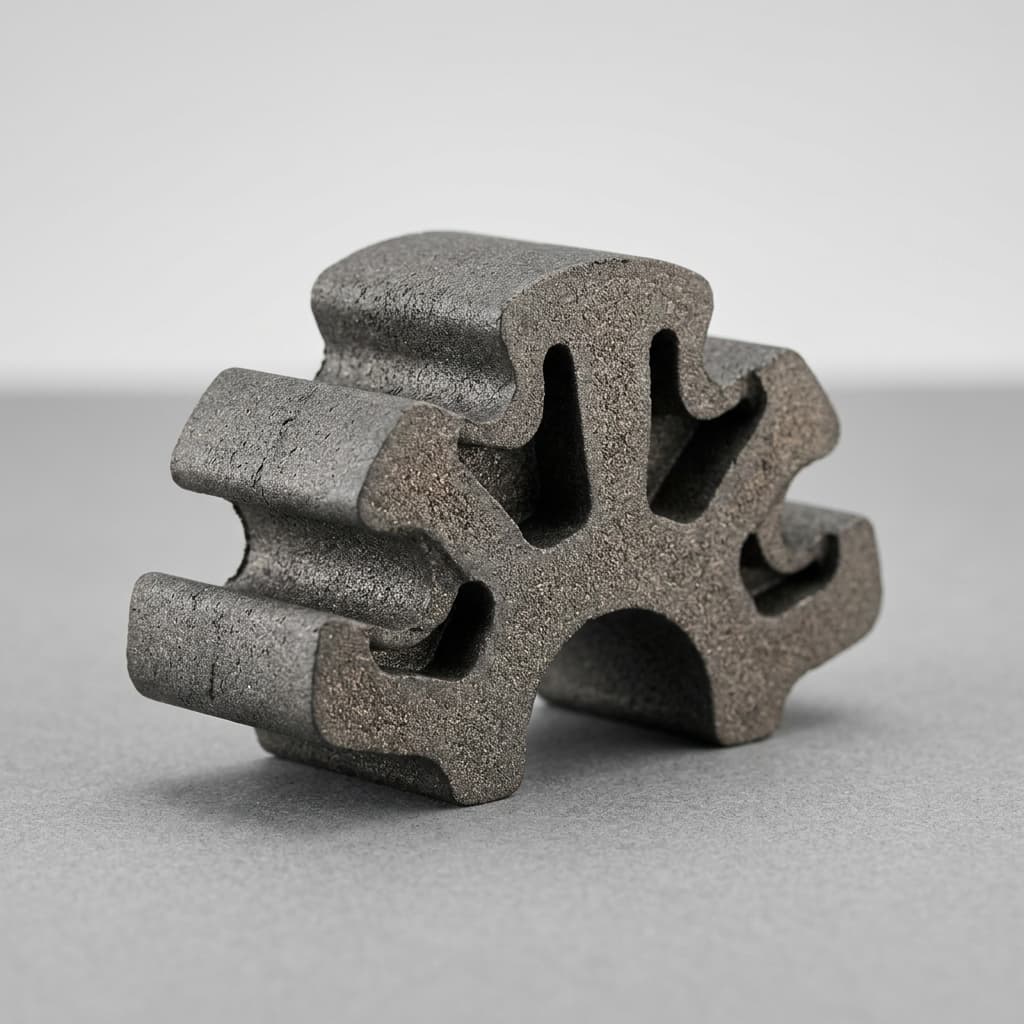
Injection Molded vs. Compression Bonded Magnets: A Procurement and Engineering Guide
Injection molded vs. compression bonded magnets: compare BHmax, tooling, binders, geometry limits, coating risk, and request a DFM review for OEM programs.
Injection Molded vs. Compression Bonded Magnets: A Complete Procurement and Engineering Guide
When transitioning away from brittle sintered magnets to more versatile bonded magnets, engineering and procurement teams must make a fundamental process choice: Injection Molded or Compression Bonded.
While both processes use isotropic magnetic powder (typically NdFeB, SmCo, or Ferrite) mixed with a polymer binder, the manufacturing method completely alters the final density, magnetic strength, shape complexity, and tooling costs. This guide breaks down the technical and commercial boundaries to help you specify the right magnet for your application.
Scope note (published July 21, 2026): This guide is written for global OEM sourcing and engineering teams comparing bonded NdFeB, SmCo, or ferrite magnets made by injection molding or compression bonding. It does not replace grade-specific B-H curve review, application temperature testing, corrosion validation, or supplier DFM on a released drawing.
If you already have a drawing, target BHmax, and annual volume, submit the specification for DFM review and use the decision matrix below to challenge the process choice before tooling release.
1. The Core Conclusion: Density vs. Complexity
The decision between injection molded magnets and bonded NdFeB magnets made by compression bonding is a direct trade-off between magnetic strength and shape complexity.
- Compression Bonded Magnets use a low volume of epoxy binder (typically 2-3% by weight) and extreme mechanical pressure to compress the powder into a die.
- Result: High density, higher magnetic strength (up to 12 MGOe for NdFeB), but limited to simple shapes (rings, blocks, discs) due to the rigid pressing process.
- Injection Molded Magnets use a higher volume of thermoplastic binder (Nylon, PPS, PA12 - around 35-40% by volume) which is heated into a fluid state and injected into a complex steel mold.
- Result: Lower density, lower magnetic strength (up to 6-7 MGOe for NdFeB), but allows for extreme shape complexity, insert molding, and multi-pole configurations without secondary machining.
2. Evidence & Technical Comparison
To support the engineering decision, the following table details the mechanical, magnetic, and economic boundaries of both processes.
| Feature | Injection Molded Magnets | Compression Bonded Magnets |
|---|---|---|
| Max Energy Product (BHmax) | 4 – 7 MGOe (NdFeB) | 9 – 12 MGOe (NdFeB) |
| Binder Material | Nylon (PA6, PA12), PPS, EVA | Epoxy Resin (Thermosetting) |
| Typical Tolerances (OD/ID) | ± 0.03 mm to ± 0.05 mm (Net-Shape) | ± 0.05 mm (Requires machining for tight ID) |
| Shape Complexity | High (Gears, Keyways, Snap-fits) | Low (Simple Rings, Cylinders, Blocks) |
| Insert Molding Capability | Yes (Direct Overmolding on Shafts) | No (Requires Secondary Gluing) |
| Tooling Cost & Lead Time | High ($5k-$15k), 4-6 weeks | Lower ($1k-$4k), 2-4 weeks |
| Corrosion Resistance | Excellent (Binder fully coats particles) | Good (Often requires e-coating or spray coating) |
| Scrap Rate | Negligible (Runners can be recycled) | Moderate (Machining generates unrecoverable dust) |
Visualizing the Structural Difference
The following diagram illustrates how the binder matrix differs between the two processes:
3. Application Limits & Trade-offs
When to Avoid Injection Molding (Limitations)
- High Torque Motors: If your BLDC motor requires maximum flux density to achieve target torque within a small envelope, the 7 MGOe limit of injection molded NdFeB will likely underperform. Compression bonded or sintered magnets are required.
- Low Volume Prototypes: The high initial capital expenditure (CapEx) for injection mold tooling makes it economically unviable for runs of under 5,000 pieces unless insert-molding is strictly required for assembly reliability.
When to Avoid Compression Bonding (Limitations)
- Complex Assemblies: If the magnet requires a D-cut for a shaft, mounting flanges, or integrated gear teeth, compression bonding will require expensive secondary CNC machining, destroying its cost advantage.
- High Moisture / Corrosive Environments: Compression bonded magnets have microscopic voids due to the pressing process. Even with epoxy coatings (like E-coat), they are more susceptible to oxidation than injection molded magnets, where the thermoplastic (like PPS) naturally seals every particle.
4. Procurement & Engineering Checklist
Before submitting an RFQ to your magnetic assemblies supplier, ensure your engineering and procurement teams have aligned on the following criteria:
- Magnetic Requirement (BHmax): Is the required energy product below 7 MGOe? If yes, injection molding is viable. If above 9 MGOe, compression bonding is mandatory.
- Geometry Review: Does the drawing feature sharp internal corners, asymmetric holes, or integrated gears? If yes, specify injection molding.
- Assembly Strategy: Are you currently gluing a compression bonded ring onto a steel shaft? Consider switching to injection-molded insert molding to eliminate adhesive failure risks and reduce BOM count.
- Operating Temperature: Will the magnet operate above 120°C? If yes, specify PPS binder for injection molding, or high-temp Epoxy for compression bonding, and verify the HCi (Intrinsic Coercivity) of the NdFeB powder.
- Volume vs. Tooling ROI: Calculate the break-even point. Will the savings on secondary machining and assembly (using injection molding) offset the $10,000 tooling cost over the product's lifecycle?
5. Frequently Asked Questions (FAQ)
Q: Can I achieve a radial multi-pole configuration on a compression bonded magnet?
A: Yes, but it is much more difficult. Compression bonded magnets are typically isotropic, allowing multi-pole magnetization, but the process requires high-energy magnetizing fixtures post-production. Injection molding can utilize in-mold magnetic fields to align particles during the fluid state, often yielding sharper transition zones.
Q: Does compression bonding require a coating?
A: Almost always. Because of the low epoxy volume and microscopic porosity, NdFeB compression bonded magnets are highly prone to rust. A protective layer (such as Parylene, Epoxy E-coat, or spray coating) is standard industry practice.
Q: Which process is better for rapid prototyping?
A: Compression bonding is faster and cheaper for prototyping simple rings or blocks, as the pressing dies are simpler to machine than full injection molds.
6. Actionable Advice & Next Steps
The choice between injection molded and compression bonded magnets is not about which is "better"—it is about matching the manufacturing process to the precise mechanical, magnetic, and commercial boundaries of your project.
If your design is failing due to adhesive fatigue on a glued rotor, or if you are spending excessive budget on machining compression bonded parts into complex shapes, it is time to evaluate injection molding.
At Injection Magnets, we provide end-to-end engineering support to determine the optimal binder, magnetic powder, and molding process for your sensor or motor application. Submit your drawings or specifications to our engineering team today for a comprehensive DFM (Design for Manufacturability) review.
Sources & References
- MQI / Magnequench: Bonded magnet material and product-family context for NdFeB, SmCo, and ferrite programs. Review MQI magnet products
- Arnold Magnetic Technologies: Technical overview of density differences between bonded magnet manufacturing methods. Review capabilities on arnoldmagnetics.com
- Eclipse Magnetics: Technical guide on bonded neodymium manufacturing, corrosion behavior, and coating considerations. Read the bonded neodymium guide
Author

Categories
More Posts
EU CRMA Compliance 2026: Sourcing Strategies for Injection Molded NdFeB Magnets
Meet EU CRMA 2026 deadlines for permanent magnets. See sourcing, DPP data, and injection molded NdFeB checks to reduce rare-earth compliance risk.
Injection Molded Magnets vs. Sintered Magnets: A Complete Guide for Automotive Sensors
Discover the critical differences between injection molded magnets and sintered magnets. Learn why automotive sensor engineers increasingly prefer molded magnetic rotors for precision, cost-efficiency, and complex geometries.

Multi-Pole Magnetization: Radial vs. Axial Patterns for Sensor Encoders
Understand the engineering differences between radial and axial multi-pole magnetization in bonded magnets. Learn how to specify the correct pole count and pattern for Hall-effect and MR sensors.